
Advances · July 15, 2026 · 7 min · By Cyrus Hellstrom
At-home IPL devices for ingrown hairs: what they can and cannot do
Countertop light devices promise fewer razor bumps by thinning the hair. They can help the right person, with real limits on skin tone and speed.
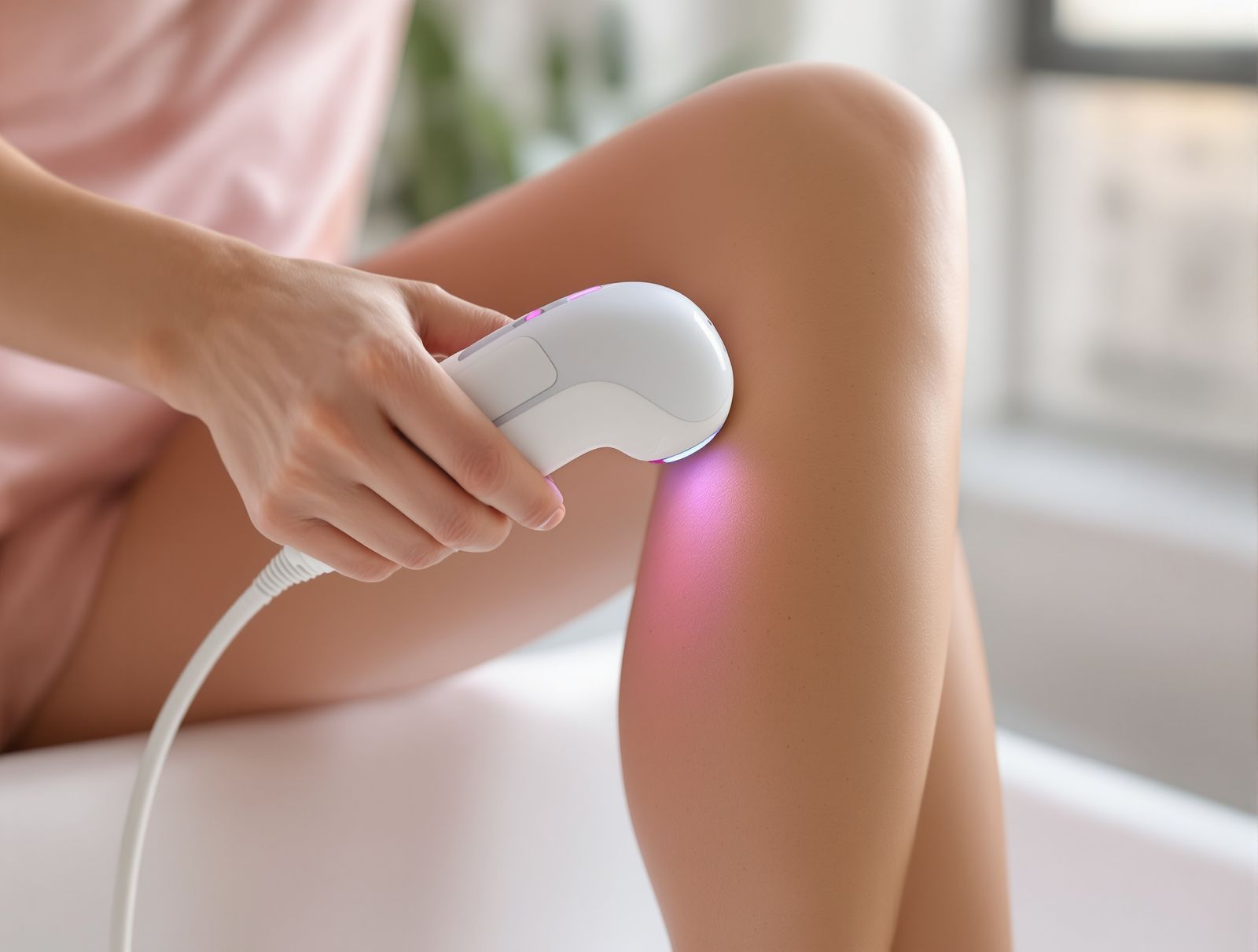
Home hair-removal gadgets are everywhere now, and the marketing leans hard on one promise: fewer ingrown hairs without the cost of a clinic. For people who have fought razor bumps for years, an at-home intense pulsed light (IPL) device that plugs into the wall and lives in a bathroom drawer sounds close to a cure. The reality is more measured. These devices can genuinely reduce ingrowns for the right person, but they are slower, weaker, and pickier about skin tone than the in-office laser that dermatologists recommend, and knowing the difference saves both money and disappointment.
Why reducing the hair helps ingrowns at all. An ingrown forms when a hair curls back into the skin instead of growing out, so the whole mechanism depends on there being a hair to trap. Thin the hair, slow its regrowth, and make each shaft finer, and there is simply less raw material for the follicle to catch. That is the logic behind every light-based hair-reduction tool, from the clinic to the countertop. The question is never whether the principle works; it is how much reduction a home device can actually deliver.
IPL is not the same as clinical laser. A dermatology laser emits a single, precise wavelength at high energy, focused by a trained operator. A home IPL device emits a broad spectrum of lower-energy light and caps its output well below clinical levels for safety, since it is designed to be used without supervision. Both work by sending light into the pigment of the hair, heating the follicle, and reducing regrowth over repeated sessions. The gap is in dose: home units need more sessions, produce more gradual thinning, and rarely match the durable results of a professional series (Mayo Clinic).
Skin tone and hair color decide almost everything. Because the light targets pigment, IPL works best on dark hair against lighter skin, where the contrast lets the energy find the follicle without overheating the surrounding skin. Most home devices include a built-in skin-tone sensor that refuses to fire on deep skin tones, precisely because the light cannot tell hair pigment from skin pigment and the burn risk climbs. This is the uncomfortable catch: many of the people most burdened by ingrowns and chronic razor bumps that scar have darker skin or light or red hair, and they are exactly the users home IPL serves worst. For those skin tones, a clinic with a longer-wavelength Nd:YAG laser and a skilled operator remains the safer, more effective route.
What the regulators actually say. In the United States, home hair-removal light devices are regulated as medical devices and cleared by the FDA for over-the-counter use, which means they have met a safety bar, not that they erase hair permanently. The FDA is careful with language here: these tools achieve hair reduction, a long-term decrease in the number of hairs, rather than permanent removal, and results vary with the person and the device (U.S. Food and Drug Administration). Read the box the same way: reduction, not a promise.
Using one without making things worse. If you are a good candidate, the routine matters. Shave (do not wax or pluck) the area the day before, so the light targets the follicle rather than a hair sitting above the skin. Never treat over an active, infected, or oozing bump; wait for it to calm. Start on the lowest comfortable energy setting, do a small patch test first, and protect treated skin from the sun, since recently lit follicles pigment easily and tanned skin raises the burn risk. Expect a schedule of roughly one session every one to two weeks for several months before regrowth visibly thins, then occasional maintenance. Consistency, not intensity, is what earns the result.
Where it fits against the alternatives. For someone with dark hair and lighter skin whose ingrowns are a nuisance rather than a scarring medical problem, a home IPL device is a reasonable middle option: cheaper than a clinic over time, private, and gentler than fighting bumps with a blade forever. It is not the tool for deep skin tones, for light, gray, or red hair (which lacks the pigment the light needs), or for anyone with the kind of darkening, scarring razor bumps that deserve a dermatologist's plan. And it is never a substitute for the basics: good technique still prevents most ordinary ingrowns, and choosing the right hair-removal method does more day to day than any gadget.
Set expectations before you buy. The honest framing is that home IPL is hair reduction on the installment plan: modest thinning, earned slowly, only for compatible hair and skin. Reviews and clinical overviews of light-based hair removal agree that professional treatment reduces hair more per session and more predictably, while home devices trade power for convenience and cost (American Academy of Dermatology). If your ingrowns are mild and your coloring fits, that trade can be worth it. If they are severe, scarring, or on skin the sensor rejects, the money is better spent on a clinic.
The takeaway: an at-home IPL device can lower how often you get ingrowns by thinning the hair that causes them, but only for dark hair on lighter skin, only over months of steady use, and only as hair reduction rather than a permanent fix. Match the tool to your skin and hair, keep the technique basics in place, and treat scarring or stubborn razor bumps as a reason to see a dermatologist rather than to buy a stronger gadget.
Related reading: Laser hair reduction as the permanent fix for ingrowns.