
Dispatch · October 27, 2025 · 6 min · By Femi Lockhart
Pseudofolliculitis barbae: razor bumps that scar
More than a nuisance, chronic beard-area ingrowns can leave lasting marks.
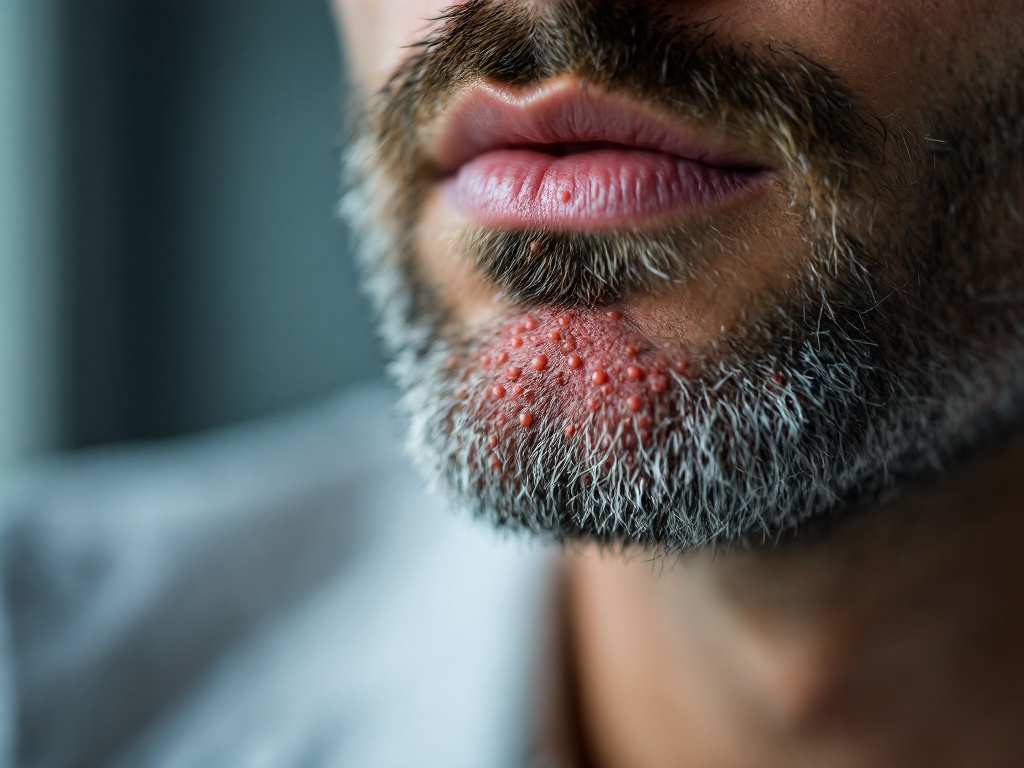
Pseudofolliculitis barbae is the medical name for chronic razor bumps in the beard area, and it is a genuine dermatologic condition rather than a cosmetic afterthought, particularly common in men with coarse, curly hair who shave.
Repeated shaving produces sharp-tipped hairs that curl back into the skin, causing crops of inflamed bumps along the jaw and neck. Left unmanaged, the chronic inflammation can lead to darkening of the skin (post-inflammatory hyperpigmentation) and even raised, keloid-like scarring over time, so it is worth treating properly rather than enduring.
Management starts with shaving technique, not shaving too closely, going with the grain, using a single-blade or electric razor, and preparing the skin well, or, for some, growing the beard out to stop cutting the hair at a problematic angle entirely. Topical treatments reduce inflammation and keep follicles clear. For severe, scarring cases, laser hair reduction is often the definitive answer because it removes the hair causing the problem. The key message is that persistent razor bumps that darken or scar deserve a dermatologist's plan, not just a different drugstore razor.
Related reading: A simple routine to keep ingrowns away.
Further reading: Review of treatments for pseudofolliculitis barbae (Clin Exp Dermatol 2023); Pseudofolliculitis Barbae: A Review of Current Treatment Options (J Drugs Dermatol 2019); Pseudofolliculitis barbae: understanding the condition and the role of facial grooming (Int J Cosmet Sci 2016).
A few principles hold across ingrown hairs and razor bumps. The cause is almost always a hair that re-enters the skin after it is cut or pulled, so the most reliable fixes reduce that friction: a sharper single blade, shaving with the grain, less aggressive grooming, and gentle exfoliation between sessions. What works for one person depends on skin and hair type more than on any single product.
Staging matters too. Most irritation calms over days once you stop traumatizing the area, while chronic, recurring bumps are better judged over weeks as the routine changes. For stubborn cases, reducing the hair itself with laser hair reduction or electrolysis is the durable answer, and a clinician can set out that plan, the expected recovery, and what to do if a spot becomes infected.
For independent background on this topic, see Pseudofolliculitis barbae (razor bumps): causes and treatment, and review the full source list below. This article is editorial reporting and is not a substitute for a consultation with a board-certified dermatologist.