
Advances · July 21, 2026 · 7 min · By Cyrus Hellstrom
Electrolysis for ingrown hairs: the permanent option when laser cannot see the hair
Laser needs pigment to work, so gray, white, blond, and red hairs slip through it. Electrolysis treats follicles one at a time regardless of color, and it is the only method regulated as permanent hair removal.
Every honest guide to stubborn ingrown hairs eventually lands on the same conclusion: the only way to end them for good is to stop growing the hair. Laser hair reduction is the usual recommendation, and for most people it is the right one. But laser has a blind spot, and it is a wide one. It cannot see hair that carries little or no pigment. If the hairs causing your bumps are gray, white, blond, or red, the laser room is largely a dead end. Electrolysis is the option that fills that gap, and it is the one method the clinical literature credits with the potential for genuinely permanent hair removal rather than long-term reduction (Laser Hair Removal, StatPearls, National Library of Medicine).
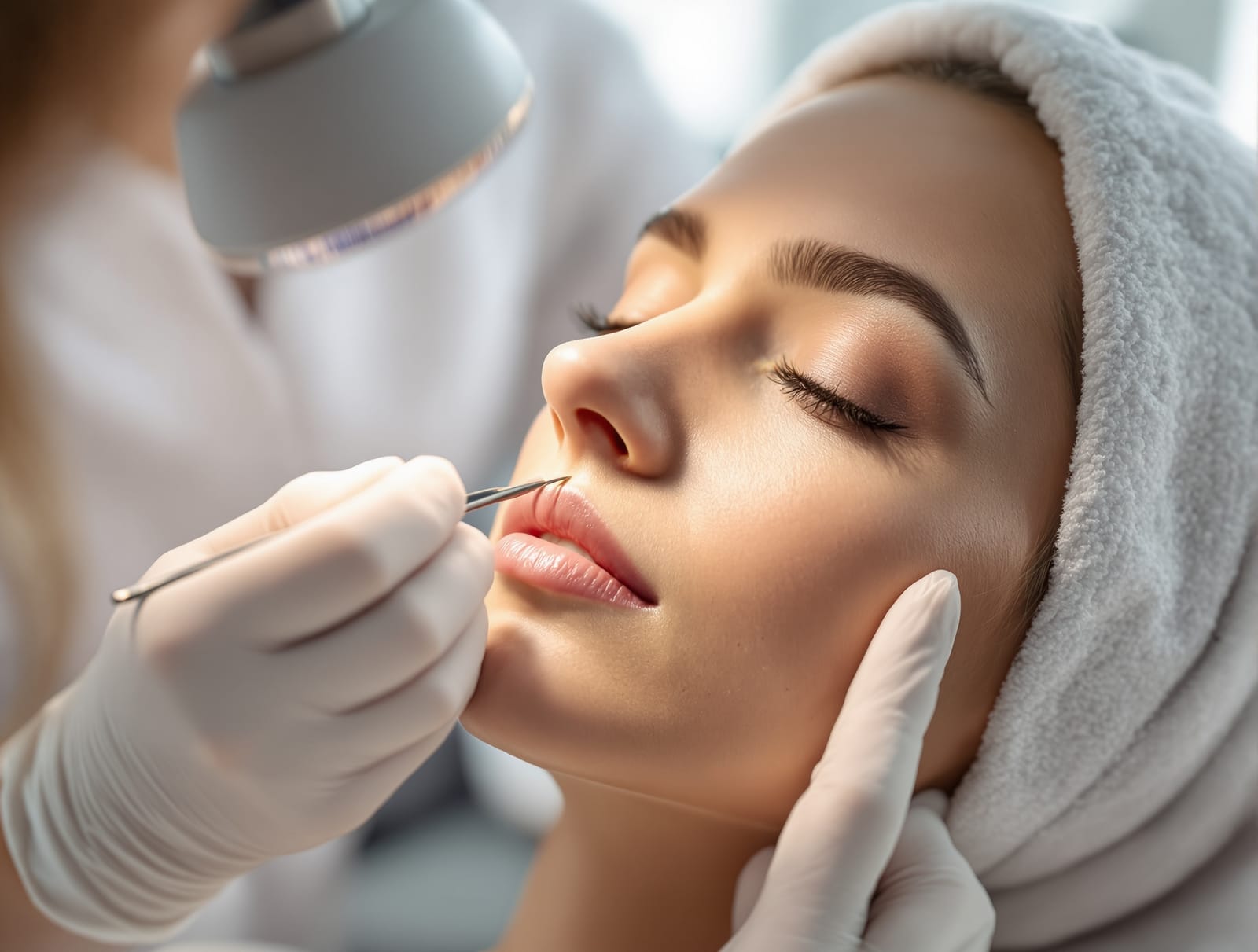
How electrolysis actually works. An electrologist slides a fine probe, roughly the thickness of the hair itself, alongside the hair down into the follicle, then delivers a small current for a few seconds. The current destroys the cells at the base of the follicle that build new hair. The treated hair is then lifted out with forceps, and it should not need to be pulled: if it resists, the follicle was not fully treated. There are three delivery methods. Galvanic electrolysis uses a direct current to create a chemical reaction that damages the growth center. Thermolysis uses a high-frequency current to generate heat. Blend combines the two, and it is what most modern practitioners use because it balances speed against thoroughness. The distinction that matters to a consumer is in the language: laser and intense pulsed light systems are cleared for permanent hair reduction, which is defined as a long-term, stable decrease in the number of hairs still regrowing when counted at six, nine, and twelve months after a course of treatment. That is a real result, but it is a reduction claim, not an elimination claim.
Why hair color decides the method. A hair removal laser works by shooting light that is preferentially absorbed by melanin, the pigment in the hair shaft. That absorbed energy turns into heat, and the heat damages the follicle. Pull the pigment out of the equation and the light has nothing to grab. That is why the American Academy of Dermatology states plainly that laser hair removal works best for patients with light-colored skin and dark-colored hair (American Academy of Dermatology, Laser hair removal FAQs), and why hairs with little pigment left to absorb the light are the ones that survive a full course of treatment. Electrolysis is indifferent to color. The probe finds the follicle physically and the current does not care what shade the hair is. For a man in his fifties whose beard has gone salt-and-pepper but whose neck still throws razor bumps, that difference is the whole story: the dark hairs may clear with laser while the gray ones keep coming back, and only electrolysis finishes the job.
What it does for an ingrown specifically. An ingrown hair is a mechanical event, not an infection. A hair curls back or grows sideways and re-enters the skin, and the body treats it as a foreign object (Mayo Clinic). We walk through that sequence in detail in what actually causes an ingrown hair. The logic of permanent removal follows directly: a follicle that no longer grows hair cannot trap one. That makes electrolysis a genuine cure for the specific follicles it treats, which is a stronger claim than almost anything else in this category can make. It is also why electrolysis is often used as a finishing tool after laser, clearing the scattered pale hairs that a course of laser left behind.
The trade-off is time. Electrolysis works one follicle at a time. A laser pulse covers a patch of skin; a probe covers a single hair. Sessions typically run fifteen to sixty minutes, and because only hairs in the active growth phase are permanently destroyed, the same area has to be revisited on a schedule while the rest of the follicles cycle into growth. A small area such as the upper lip or a patch on the neck can take under a year of regular appointments. A full beard, chest, or bikini line can take considerably longer, often eighteen months or more of weekly or biweekly visits early on, tapering as hair thins. Per-session cost is usually lower than laser, but the number of sessions is far higher, so the total commitment is real. Anyone promising permanent clearance in three visits is selling something else.
Comfort and safety. Each insertion produces a brief stinging or heat sensation, and most people describe it as tolerable but tedious rather than sharp pain. Topical numbing cream helps on sensitive regions. Expect temporary redness, small welts, and mild swelling for a few hours afterward. The genuine risks come from technique and hygiene: unsterile probes can introduce infection, and excessive current or repeated overtreatment of the same spot can leave small scars or pigment changes, particularly in deeper skin tones already prone to the dark spots ingrowns leave behind. Outcomes depend heavily on operator skill, and licensing requirements for electrologists vary widely from state to state, so ask directly about training, licensure, and whether probes are single-use and disposable before the first appointment.
Do not start on inflamed skin. Electrolysis is a treatment for the underlying hair, not for an active flare. If an area is currently hot, swollen, or draining, that needs to settle first, and a bump with spreading redness or pus belongs in the category of an infected ingrown that needs a clinician. Working a probe into inflamed tissue invites exactly the scarring the whole plan is meant to avoid.
Choosing between the two. If your hair is dark, your affected area is large, and you want visible improvement in a few months, start with laser. If your problem hairs are gray, white, blond, or red, if the area is small and well defined, or if laser has already run its course and left a stubborn remainder, electrolysis is the better tool. Many people who have fought razor bumps for years end up using both in sequence. Either way, keep prevention running in the meantime, because a course of permanent removal takes months and the follicles are still producing hair the whole time (MedlinePlus, National Library of Medicine).
The takeaway: electrolysis is slow, methodical, and the only method that can legitimately promise the hair is gone. For anyone whose ingrowns come from hair a laser cannot detect, that trade of time for permanence is often the deal worth taking.
Related reading: Laser hair reduction as the permanent fix for ingrowns and best hair removal methods for ingrown-prone skin.